
It seems like suddenly Opus Dei is in the news. When I was in the seminary back in the mid-1980s studying to become an ordained Benedictine monk, I came across an article that caught my attention: “The Holy Mafia, Opus Dei: For God, for Country, or for Profit?,” (Atlas August 1966, pp. 28-32). I decided to write a term paper on this organization and its founder, Josemaría Escrivá for a history class assignment. My professor, one of my favorites, suggested that I polish it up and submit it for publication. Eventually, after several rounds of revisions, it was accepted. Click on this link to see a PDF copy from the American Benedictine Review: Escriva’s Opus Dei. You’ll see that my critique was subtler and more indirect than it should’ve been; however, I did manage to raise some questions at the end of the piece that are still unanswered and relevant in my view.
Much has change since this piece was published in 1989:
- I left the monastery and priesthood in 1990 and got married in 1993;
- the founder of Opus Dei, Rev. Josemaría Escrivá de Balaguer y Albás was canonized in 2002 and subsequently became the Patron Saint of Diabetics among other things; and,
- Christian Nationalism has become enmeshed in the political, social, and economic fabric of the US and elsewhere.
My suggestions:
- Put your “faith” to work accepting the complexities, ambiguities, and paradoxes of Life;
- Embrace the Mystery rather than fearing it or, worse yet, trying futilely to dominate it; and
- Use the expression, “one among several” rather than “the one and only.” It’s almost always applicable. The Catholic Church, like all organizations and institutions, is not a monolith. You might be surprised to learn how heterodoxical and dynamic it is; but, that can be said about everything! Don’t fear pluralism or lifelong learning. As another seminary professor once said, “Heaven is reserved for people who like surprises.” Click here for additional assistance.
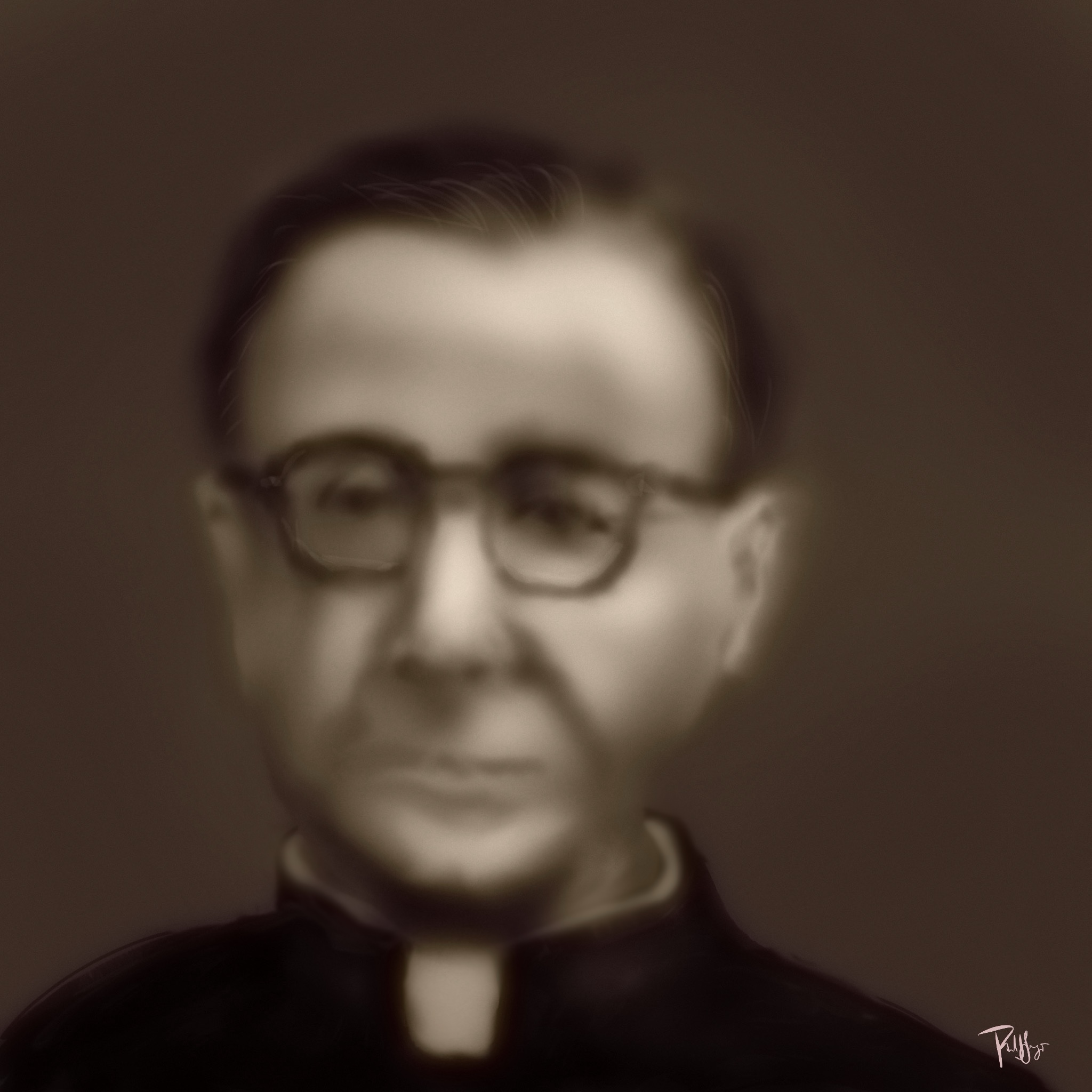
Josemaria Escriva, a freehand, digital iPad art painting done in the Sketch Club app using an Apple Pencil
 portfoliolongo