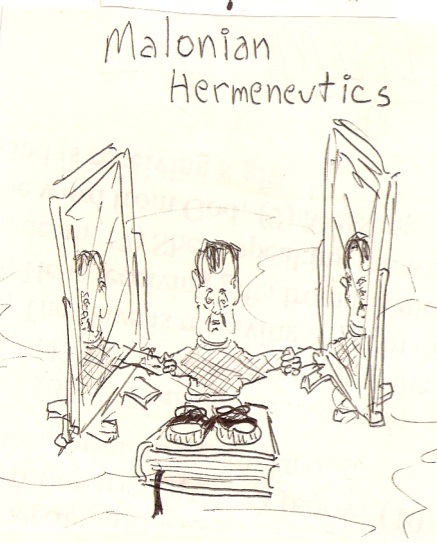
Practical Hermeneutics, Living Context, and the Deep End

I’m still thinking about Between, mirrors, and inter-independent subjectivity in relation to interpreting and understanding texts of all sorts, tangible and intangible. Weren’t you just asking about that?  We so underestimate sense making and, consequently, settle for less and less.  I’m thinking political discourse, marketing, educational psychology, etc.. We’re told we’ll go off the deep end if we unglue ourselves from the loyalty wall and approach sense making eclectically, pragmatically, and collaboratively.  Soon each of us will be hopping around and around in a private, one-legged sack race, taking personal responsibility for one one-hundredth of his or her cognitive capital and sacrificing the rest to what, an antiquated but persistent hermeneutical habit?

But wait! “Cada uno es hijo de sus obras.” Aha! Cervantes had Sancho Panza himself say this in Part I, Chapter 47 of Don Quijote de la Mancha.  Who better than Sancho to balance things off, turn things up-side-down and inside-out?  Roughly translated, We are the children of our works. Oh, the offsprings?  Never mind.
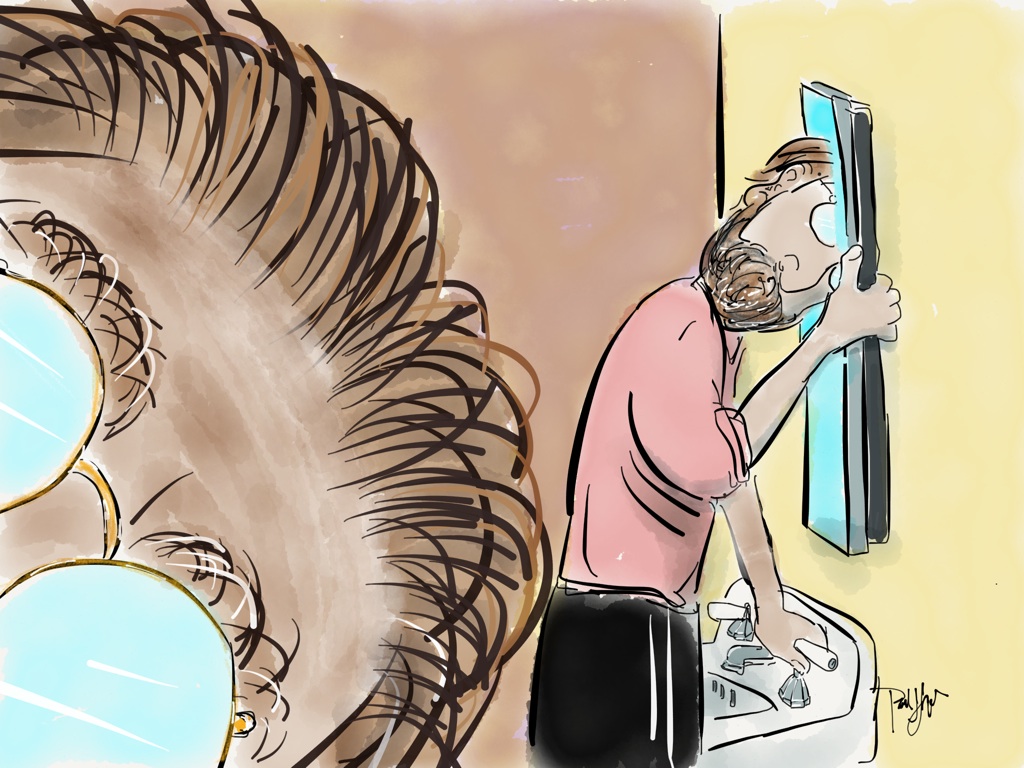
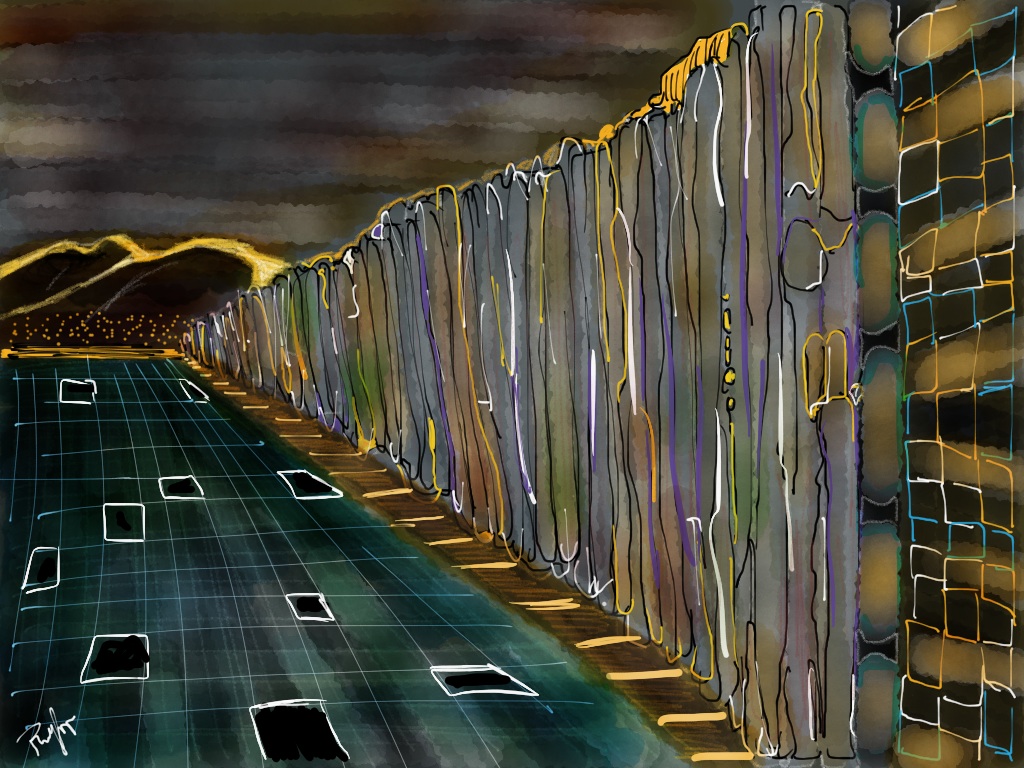
deep ends


Sack race rules.


The Problem with Premature Conclusions

A blog post written by my friend, William Fisher, inspired this drawing. I encourage you to read it. William has a lot to say, and he always pumps up my head with images. You know the concept of “least or lowest common denominator?” William addresses our technical and cultural resistance to exploring and discovering the potential inclusiveness, simplicity, and universal meanings that lie therein. Where? At the symposium; but, is there a common gathering place, a common language? It’s as if we’re naturally or habitually inclined, ok, some of us more than others, to individuate, to pursue the greatest or highest uncommon denominator. Look, check out his blog. I’ll let you draw your own insights, but just don’t jump to any conclusions.

20140328-073331.jpg

When Is It Kaput?

In the early 1980s I attended a lecture given by an artist/philosopher who aimed to explain the act of art creation. From his phenomenological perspective – and strengthened by his beautiful German accent – he emphasized that the very first line, smudge, mark, or expressive movement is a mistake. This is then followed by a second expressive attempt to correct that first mistake, an act which results in an even bigger mistake, of course, and, naturally, an even more compelling invitation to mend it. See a pattern? Each subsequent, additional, inductive, and deductive effort to repair the opus merely adds to the accumulation of purposelessness and further hollows out any remaining significance! Finally, the artist discovers that nothing can fix it; no more tinkering, no more cobbling, no more troubleshooting. The piece is irreparable. The piece is finished! “It’s Kaput!”

For years I internalized this rather lopsided approach and applied it to practically every aspect of my being. Yes, it was like playing Russian roulette with my life.  When it came to art, I approached the blank paper, the block of wood, the lump of clay like a Quixotic adventure. I entered it and allowed myself to get carried away. When the muse was there, we collaborated swimmingly; when it wasn’t, I’d try again later. Nowadays, I realize that there aren’t enough hours in the day and that some things really do start off as half-baked ideas, require planning, rely on infrastructural support, and so forth, long before execution.

I still love indulging in let’s just see what happens. It challenges me to go with the flow and know when to quit. Is there such an alternative as quitting while you’re ahead?

image-3

Smoke and Mirrors

Hold on to the smoke for a moment, and consider how mirrors are revolving doors between complementary sides.  A professor of biblical spirituality once parenthetically stated in a class I was taking that we’d all be much better off approaching sacred texts not so much like answer-providing crystal balls but rather as question-provoking mirrors. Rumi asked: “If you are irritated by every rub, how will your mirror be polished?”

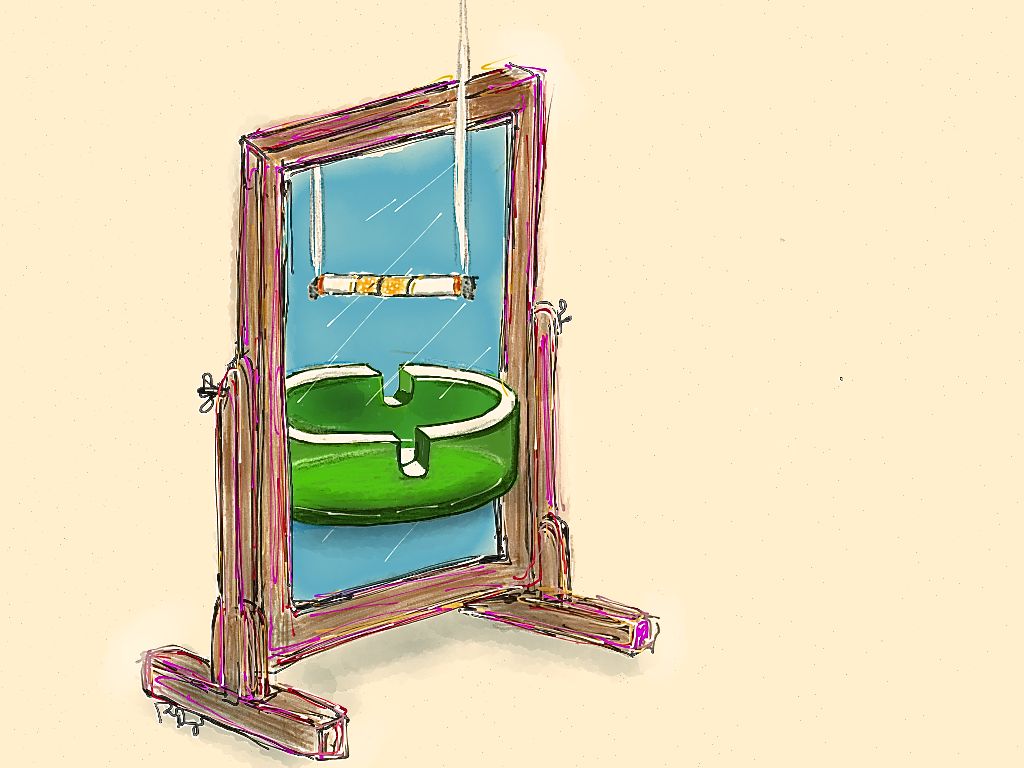
OK, you can exhale now.  I toy with mirrors from time to time.  This morning I decided to play around with this artifact in Fifty Three Paper.

smokeNmirrors

It’s all practice.  I’m not sure what it means if it means anything at all, but it was a study in a new technique and an opportunity to play with the familiar image even though I usually have two mirrors facing one another partially.  The colored outlines on the mirror frame were my attempt to loosen it up after the fact; I find the drawing tighter than necessary, and I hope to relax over time. I started with the cigarette because it was the first related image that came to mind. I was searching for an image that could stick out the same way it would stick “in,” you know, kinda’ like a two-handed saw.  I went with a cigarette instead. I tried to capitalize on the notion of inside vs outside smoke.  Then the ashtray happened; and here’s where I tried something new with the lighting and reflection and variegated coloring, something unusual for me and my black & white, stick-figure imagination.

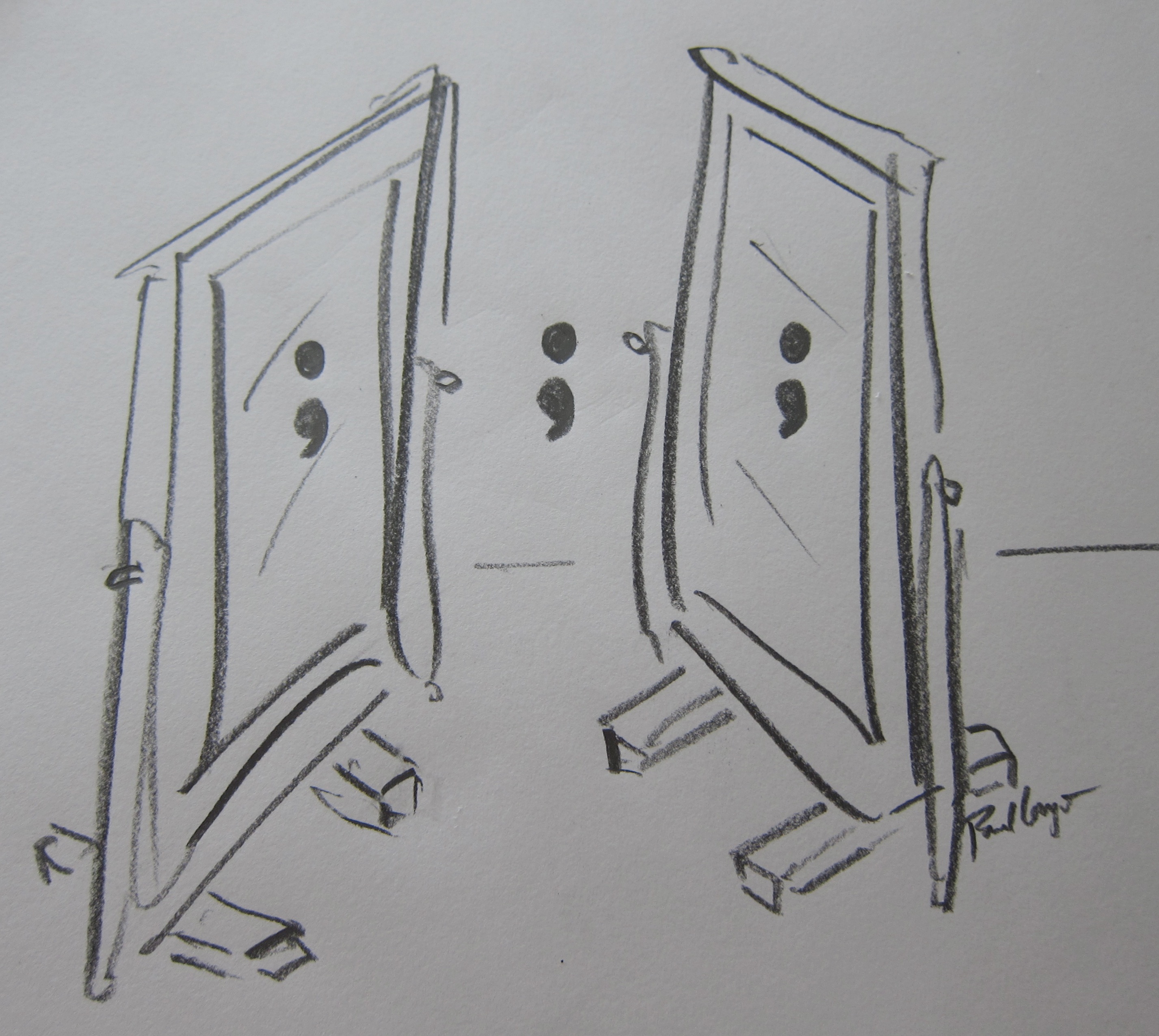
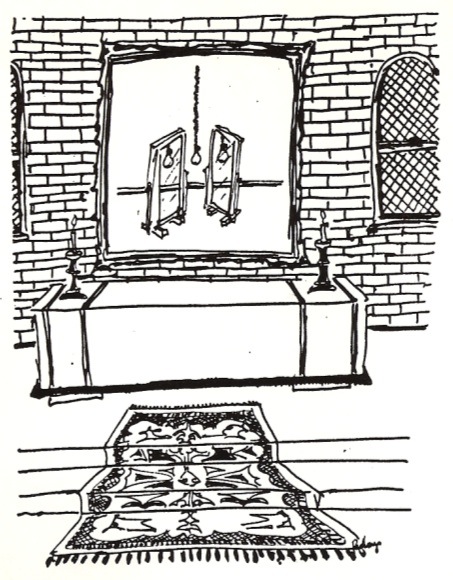
I’ve done some mirrors in the past. In the above drawing, because of the iPad drawing app and the corresponding techniques at my disposal, I deviated from what had almost become an irreversible pattern, as depicted in these examples:

Check out, https://portfoliolongo.com/2018/06/16/the-bible-crystal-ball-or-mirror/ on this illustroblog, please.

IMG_1934 Snapshot 2008-11-28 17-04-40 Snapshot 2008-11-28 17-50-26 Snapshot 2008-11-28 17-58-11 Snapshot 2008-11-28 18-08-45 Snapshot 2008-11-28 19-01-28

You exhaled, right?