ARTIST'S STATEMENT:
I want my artwork to comfort the afflicted and to afflict the comfortable. I want it to shed light and call attention to beauty, coherence, and unity; and, I want it to cast doubt on falsehoods, oversimplifications, and absurdities. I’d like to be instrumental in deepening our awareness and appreciation of the fullness of life, including its complexities, ambiguities, and paradoxes.
I draw and paint on an iPad with an Apple Pencil or my fingers using a variety of drawing/painting apps; although, I still work in wood and clay as well. iPads are portable and versatile, require little set up, and there’s no clean up. They’re the perfect medium for what I do. I can quickly convert ideas into illustrations and share them or time-lapse videos of them on social media. I can also prepare the images for printing on metal, paper, and canvas surfaces in a variety of sizes.
BIOGRAPHY:
Paul Longo has lived a relatively unconventional life. In his youth, he plowed through dyslexia (before teachers had ever heard of it) and learned that there is, indeed, more than meets the eye. In college, he read Don Quijote in Spanish for the first time and discovered an interest in anthropology. He went on to complete 3 graduate degrees and has lived and worked in 7 countries and 9 states since then. Paul has taught anthropology, education, Spanish, research and evaluation methods, and ESL at 6 different universities. These days he teaches digital art to adults with developmental disabilities and non-credit ESL to adults at a local community college.
Paul was also a Benedictine monk and lived in a monastery for nearly 8 years, until he met and married his wife. Together they were survivors of Hurricane Katrina as residents of New Orleans. But it was not until 2013, while living in a downtown loft in Des Moines, Iowa, that Paul complained to his wife, a CIO in higher education, about not having either a basement or a garage in which to make art. A few days later she gave Paul her old iPad with an installed drawing app and said, “here’s a studio for your lap.” Since then, not only have iPads become larger and more powerful, but the number of drawing and painting apps has increased and each one offers a unique set of features to create original artwork. Nowadays, Paul takes his "studio” everywhere he goes.
Throughout his eclectic journey, Paul has created and shared his art to make sense of the world, to give voice to new identities and experiences, and to engage more intentionally with others. To view more of Paul Longo’s works, digital and otherwise, visit his social media sites: www.portfoliolongo.com, twitter, YouTube, Instagram: @plongeaux, Facebook: Paul J. Longo
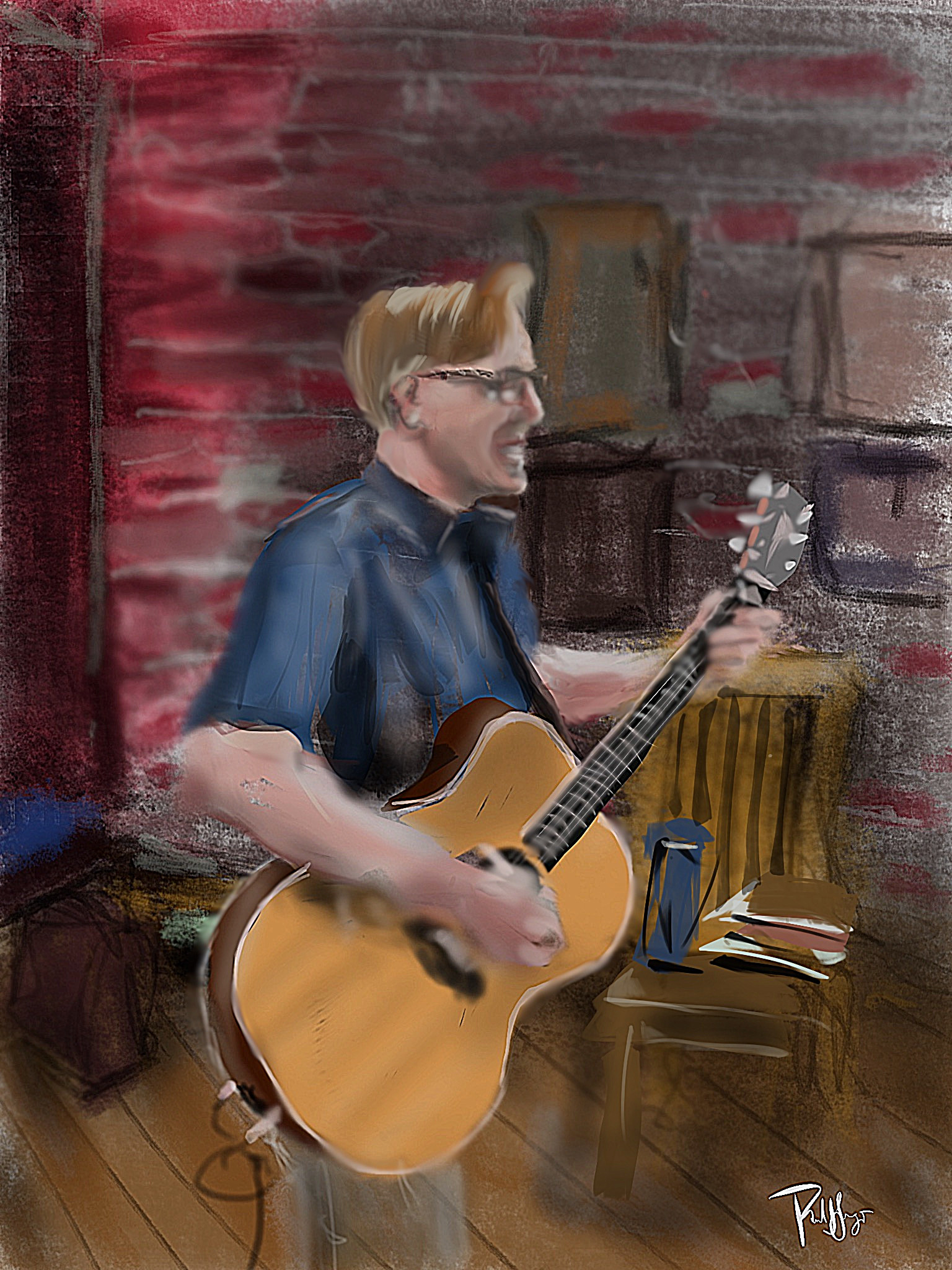
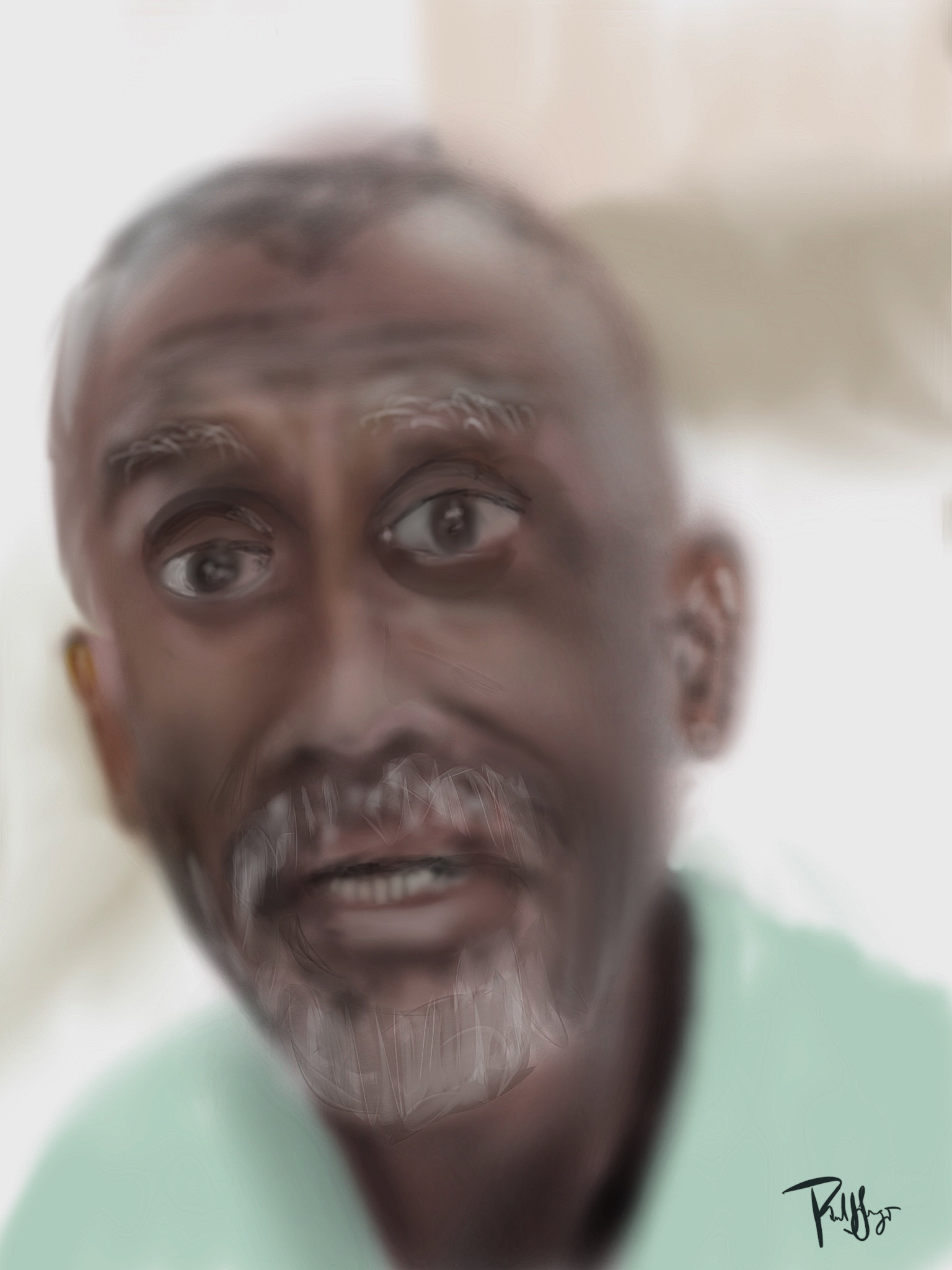
Here’s John playing at Jackie O’s in Athens, OH. He said it was ok for me to use the photo reference from FaceBook that this quick, freehand, digital (iPad) painting is based on. Check‘em out (here and here) and in person to partner with his countless fans, colleagues, collaborators, and clients. He’s one of the big reasons why I’m so glad to be back in Athens.
John Horne – rendered on an iPad Pro in Sketch Club using an Apple Pencil
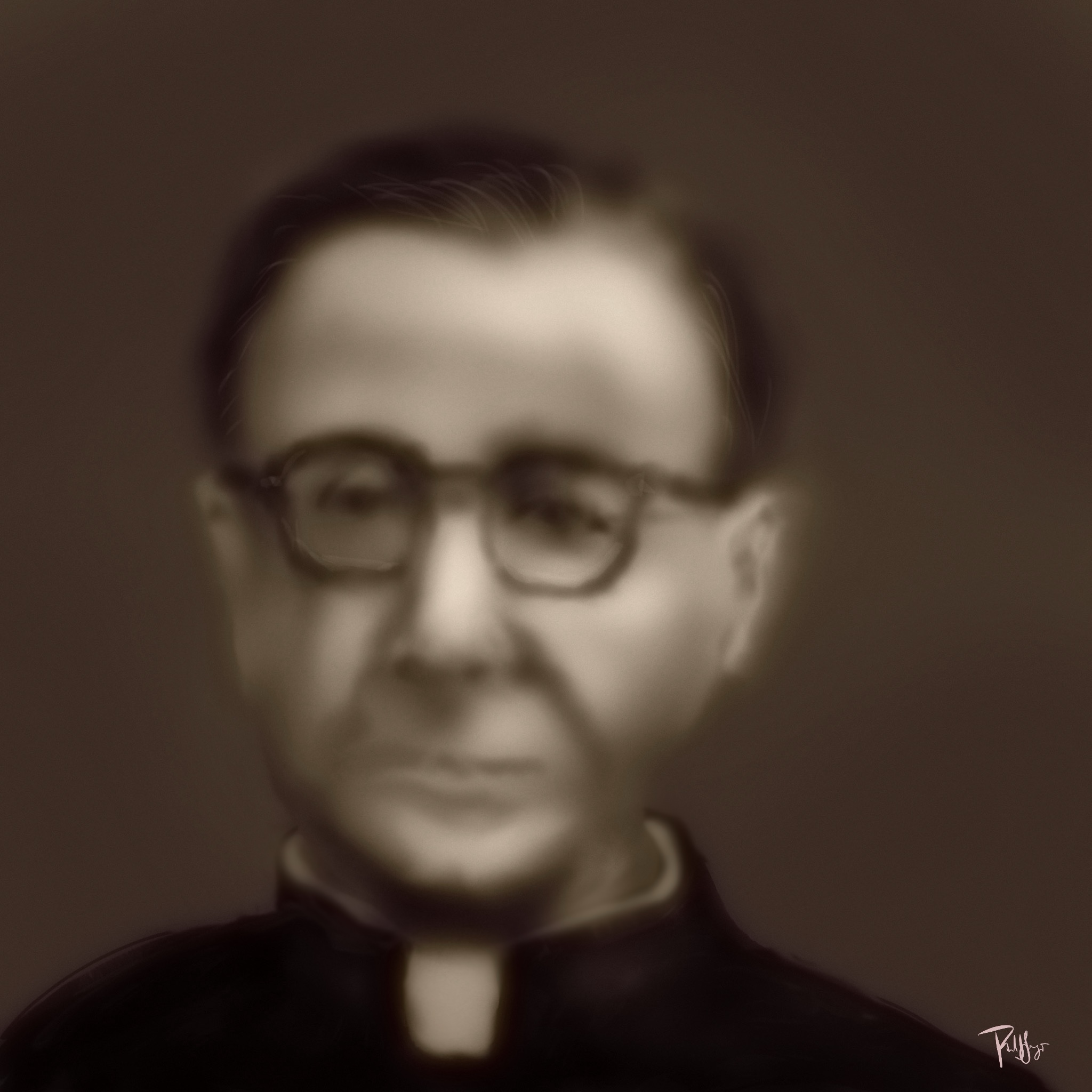
It seems like suddenly Opus Dei is in the news. When I was in the seminary back in the mid-1980s studying to become an ordained Benedictine monk, I came across an article that caught my attention: “The Holy Mafia, Opus Dei: For God, for Country, or for Profit?,” (Atlas August 1966, pp. 28-32). I decided to write a term paper on this organization and its founder, Josemaría Escrivá for a history class assignment. My professor, one of my favorites, suggested that I polish it up and submit it for publication. Eventually, after several rounds of revisions, it was accepted. Click on this link to see a PDF copy from the American Benedictine Review: Escriva’s Opus Dei. You’ll see that my critique was subtler and more indirect than it should’ve been; however, I did manage to raise some questions at the end of the piece that are still unanswered and relevant in my view.
Much has change since this piece was published in 1989:
I left the monastery and priesthood in 1990 and got married in 1993;
the founder of Opus Dei, Rev. Josemaría Escrivá de Balaguer y Albás was canonized in 2002 and subsequently became the Patron Saint of Diabetics among other things; and,
Put your “faith” to work accepting the complexities, ambiguities, and paradoxes of Life;
Embrace the Mystery rather than fearing it or, worse yet, trying futilely to dominate it; and
Use the expression, “one among several” rather than “the one and only.” It’s almost always applicable. The Catholic Church, like all organizations and institutions, is not a monolith. You might be surprised to learn how heterodoxical and dynamic it is; but, that can be said about everything! Don’t fear pluralism or lifelong learning. As another seminary professor once said, “Heaven is reserved for people who like surprises.” Click here for additional assistance.
Josemaria Escriva, a freehand, digital iPad art painting done in the Sketch Club app using an Apple Pencil
Last night the Episcopal Church of the Good Shepherd on the campus of Ohio University in Athens, Ohio hosted guitarist Dr. Júlio Ribeiro Alves, a faculty member of the Marshall University School of Music since 2006. No microphone, no sound system; only the maestro, his guitar, and the beautiful music their collaboration produced.
Before the night had ended I began committing to memory this digital rendition of Alves and his guitar on my iPad Pro in the Sketch Club app using an Apple Pencil and a reference photo that I took towards the end of the performance. I “finished” the piece this morning in Sketch Club adding a tweak or two in iColorama. Below I’ve inserted the behind-the-scenes “Sketch Stats.”







 portfoliolongo