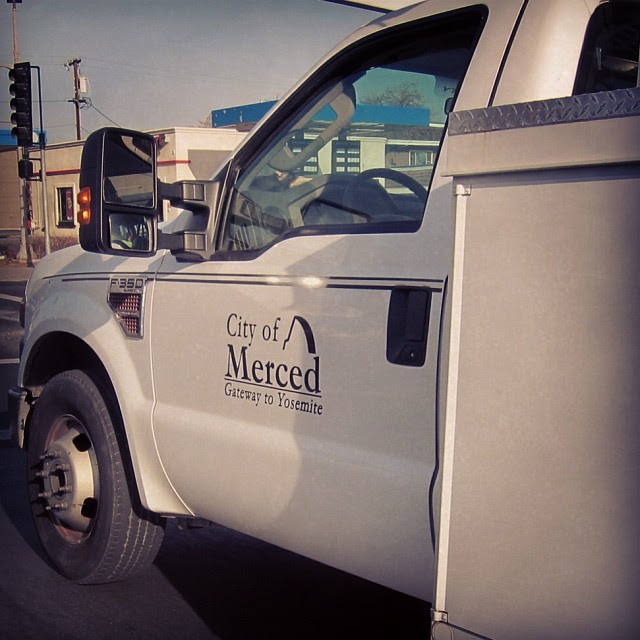
As we move from the Hartford of the West (Des Moines, IA) to the Gateway to Yosemite (Merced, CA), from the nation’s breadbasket to not far from its salad bowl, we’ll have to keep an eye on water like never before. Water is a finite and precious resource practically everywhere, and this is especially true in the San Joaquin Valley.
Watching the final episode of Treme last night on HBO reminded me of the richness and incomparability of New Orleans and the life-changing 5 years that my wife and I spent living, working, and redefining ourselves there from 2005 to 2010, roughly the same timeline that David Simon and Eric Overmyer followed in the creation of Treme. We had been there just under 6 months before Hurricane Katrina hit. That portion of my experience and memory will forever be eclipsed by the following 4 and a half years dedicated one way or another to one form or another of rebuilding. Treme helped me begin to make sense of the fullness of that experience, which I wouldn’t trade for anything in the world. New Orleans is an incomparable city in so many ways, and it has an enormous lesson to teach the rest of the world; and Treme, if I may generalize, should be a central component of the curriculum.
Last night’s final episode of Treme coaxed out a pre-Katrina memory. I was reminded of one of the many trees that we had to have removed from our property in Algiers Point, one of the few things we got done BK (Before Katrina). Some folks in the neighborhood called this tree a misbelieve tree or a misplease tree. It was, in fact, a Eriobotrya japonica or loquat tree, which some called a Japanese plum tree. Its trunk had been damaged, it leaned very much, and the arborist said it had to go. Those names, I’ve read, are associated with the tree’s name in either French or Italian. I’m not sure. Any ideas out there?
You’ll see this tree in living color 15 seconds into the following short video that I put together (images and terribly slow soundtrack) to celebrate our selling the property, which I’ve been told was the last house to sell in the Western Hemisphere in the summer of 2008!
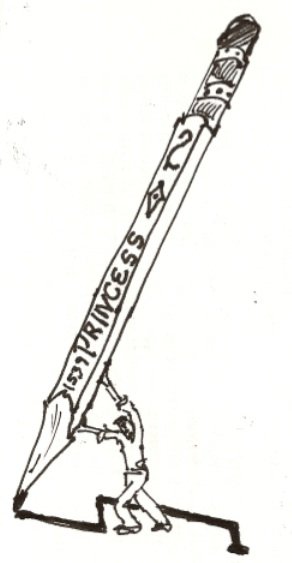
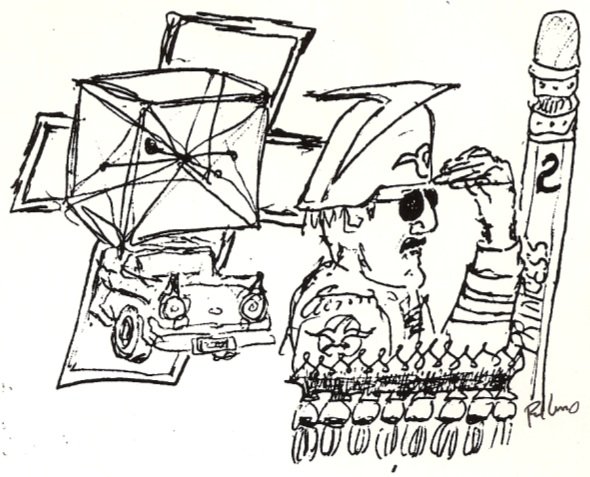
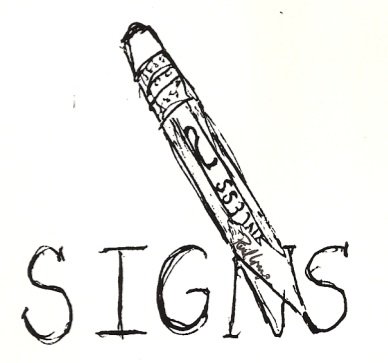
(Pardon the interruption, but since I posted this long ago, I’ve added a gallery on the right-hand side of this blog dedicated to the Princess No. 2 School Pencil. Please read on, oh, and welcome.)
In a short video posted today by the New York Times, 72-yr. old Count Anton-Wolfgang von Faber-Castell says, “If you put the pencil into a drawer, and you will leave the room, and you will not come back, but your great grandchild will come back and find the pencil, the first stroke he writes, it doesn’t dry out, it lasts virtually forever.”
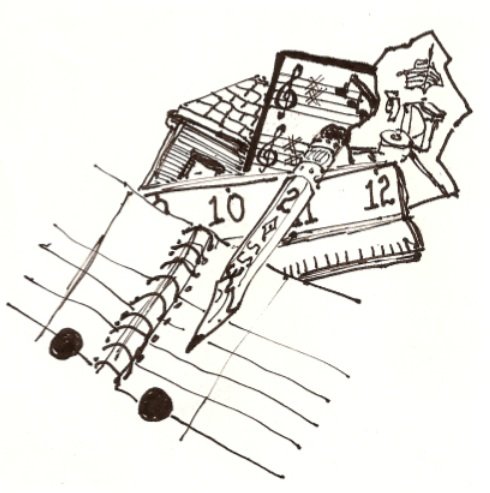
Such is the uniqueness of this instrument, especially the Princess No. 2, which has tickled my fancy for decades. Across the top of my home page is a photo of larger-than-life-sized Princess No. 2, which I carved out of poplar, engraved, painted, stained, and sealed back in the mid 1980s.
2014
I look forward to doing more sculpting and carving once I get my studio back up and running; stay tuned…
I’ve added a few thematically related drawings from that era, but first, check out that short video:






 portfoliolongo